
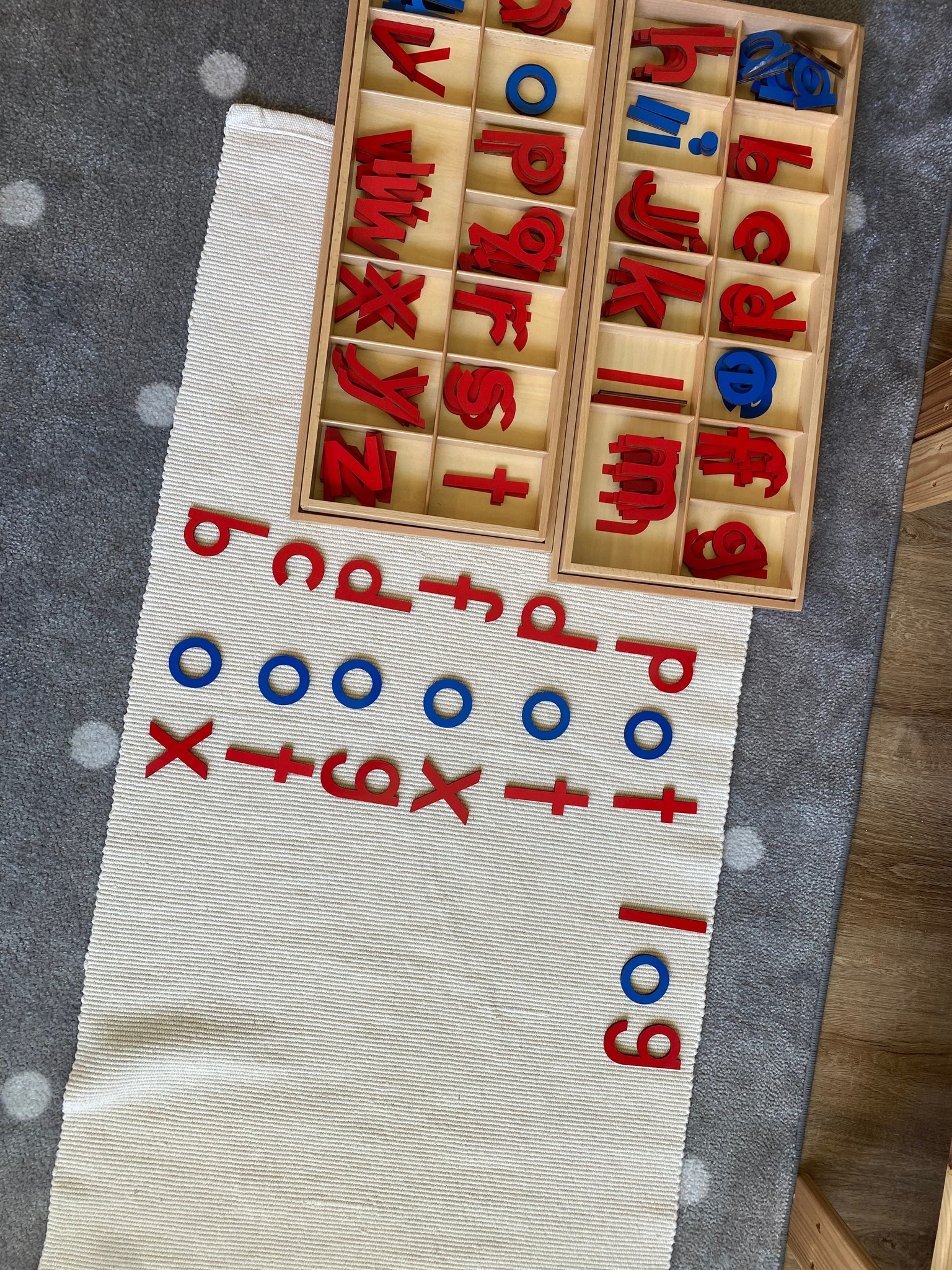
In a Montessori, children learn to read and write in a way that feels natural, joyful, and deeply engaging. Instead of memorizing letter names or completing worksheets, they explore literacy through hands-on materials and meaningful experiences that match their developmental stage.
Montessori begins with strong sensory connections. Before they ever pick up a pencil, they begin forming words with the moveable alphabet. Writing often comes reading, giving children the confidence and understanding they need to decode words on their own later.
Children choose their literacy work based on interest and readiness, which makes learning feel exciting rather than pressured. Materials like metal insets support writing by strengthening hand control, while object boxes and picture cards build vocabulary, comprehension, and a love of language.
Because activities are thoughtfully sequenced, children develop skills at a pace that feels right for them. They move from sound awareness to word building, from simple reading to rich storytelling and creative writing. Throughout it all, Montessori guide offers individualized support that respects the unique path of each child.
Real-world language experiences are woven into every day. Children label objects, write messages, read stories, explore new words, and express themselves through writing. Reading and writing are not isolated subjects—they’re part of meaningful, purposeful work.
The result is confidence, independence, and a genuine love for literacy. Montessori reading and writing are effective because they meet children where they are and guide them toward where they are ready to go—joyfully, naturally, and with deep understanding.
We will be happy to help you!
Comments are closed